

In the issue, I write about two trials that are good news for justice, one in Switzerland that upheld a 2021 ruling that put a former Liberian commander behind bars (people say he ate a human heart) and another one in the U.S. that sentenced one of the people responsible for the murder of the former President of Haiti in 2021. Plus, a Saudi drama series about 'halal' prostitution rings in the capital Riyadh, a beautiful hand-drawn animation on a lesser known mass migration movement from China to Hong Kong, a love letter to the anti-car paradise Tokyo, AI investment in Nigeria, a very disturbing movie about Indian incels, and so much more.
Some of the war crimes committed during the civil war in Liberia were brought to court in Switzerland
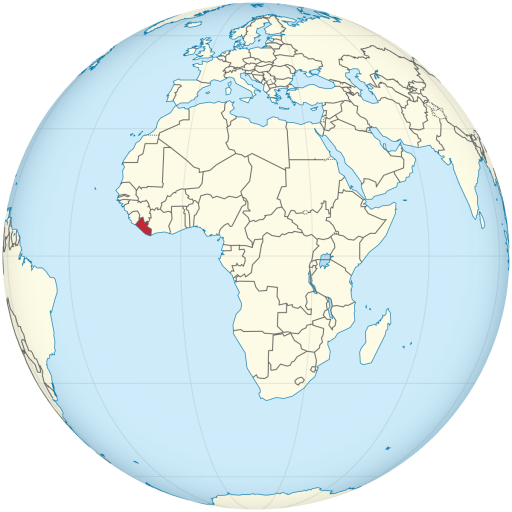
What happened:
A Swiss court found Alieu Kosiah, a Liberian national, guilty of crimes against humanity committed during the First Liberian Civil War (1989--1996), sentencing him to 20 years in prison. This is not a new ruling but an upholding of a 2021 one. The trial was mainly based on testimonies of witnesses, on narrations of events that happened decades ago and thousands of kilometers away.
Why this matters:
This is Switzerland's first ever war crimes trial. A 2011 Swiss law allows prosecution for serious crimes committed anywhere, also known as the principle of universal jurisdiction.
Tell me more:
Kosiah's list of crimes reads like a horror novel. Between 1993 and 1995, as commander of the armed group ULIMO, Kosiah allegedly enslaved, raped and killed people more than 30 years ago during the first Liberian Civil War. He is said to have eaten the heart of one victim. The judges in Switzerland now see this as proven, even though there is little written evidence. For those interested in details, Michael Schillinger for NZZ has talked to Kosiah in person, and wrote this portrait in German. Kosiah's been in prison for this since 2014, when he was first accused of these war crimes by seven other Liberian nationals and victims with the support of a Swiss NGO Civitas Maxima.
What happened during the First Liberian Civil War?
Okay, buckle up for a quick history lesson. The first civil war took place between 1989 and 1996, and killed around 200,000 people. By the late 1980s, President Samuel Doe had become totalitarian and very unpopular, Charles Taylor (who wanted to replace him) and his armed group NPLF invaded Liberia from the Ivory Coast, overthrew Doe in December 1989 and gained control over most of the country within a year. In the meantime, several other armed groups had joined, the INPFL (who executed Doe), the ULIMO (pro-Doe, Kosiah was part of this one), and some others. Peace negotiations and foreign involvement eventually led to a peace agreement in 1996, with Taylor being elected President of Liberia and entering office the next year. The peace lasted for two years until the Second Liberian Civil War broke out when anti-Taylor forces invaded Liberia from Guinea in April 1999. The second civil war lasted until 2003.
Fun fact:
Overall, 25 individuals have served as President of Liberia, including Ellen Johnson Sirleaf, the first elected female head of state in Africa.
A lot of sh*t must have happened during that time...
Yep. And unlike neighboring Sierra Leone (they were going through a civil war at the same time and later held war crimes trials), no prosecutions have taken place in Liberia. This is one of the main reasons why the victims testifying in Switzerland and other courts in France or Finland have asked for anonymity for fear of reprisals. Some former warlords still hold major positions in the country. However, momentum is growing outside of Liberia for justice for war crimes.
Did you know
that, unlike Sierra Leone, Sudan, or Ivory Coast where books with stories of former child soldiers and survival of war have been published, not many personal stories in the form of memoir have been published by Liberians? Nvasekie Konneh's memoir is one of the very few talking about the Liberian Civil War. Interestingly, Konneh is also a childhood friend of Kosiah's.
Is Switzerland any good at prosecuting international war crimes?
There's been rumors that Switzerland is, in fact, not good at it. According to the NGO Track Impunity Always (TRIAL), Switzerland compares poorly with its European neighbors. Lack of resources are often cited as reasons. In the Netherlands, for example, 62 employees are responsible for prosecuting international crimes. Plus, some other critical voices are saying that there are political individuals, like Rifaat al-Assad, uncle of the Syrian President Bashar al-Assad and Ousman Sonko, former Gambian interior minister, whose trials just never really, well, kick off. There's hope that this might now change.
One of the people responsible for the murder of the former president of Haiti has been sentenced to life in prison in the U.S.
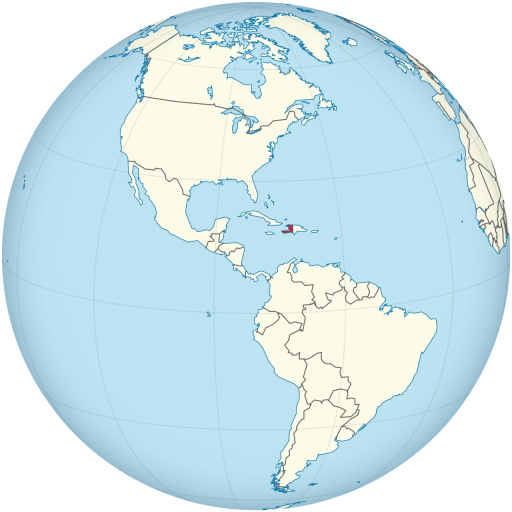
What happened:
A Florida court in the United States sentenced Rodolphe Jaar, a Haitian-Chilean national, to life in prison for the July 2021 assassination of Haitian President Jovenel Moïse.
Why this matters:
Since the assassination, Haiti has fallen into chaos, with street gangs and individuals spreading chaos and communities taking revenge with violence....
Please log in or subscribe for free to continue reading this issue.
We could use your help to make this issue better. Take a look at the requests below and consider contributing:
- Submit a piece of artwork for this issue
- Submit a news, academic or other type of link to offer additional context to this issue
- Suggest a related topic or source for future issues
- Fix a typo, grammatical mistake or inaccuracy
Below you'll find some of the sources used for this issue. Only sources that support "media embedding" are included.
-
GENEVA, Switzerland - A Swiss appeals court on Thursday upheld a 20-year sentence for a former Liberian warlord, confirming his war crimes conviction and,...
-
Wer ist der Kriegsverbrecher Alieu Kosiah, der heute in Bellinzona zu 20 Jahren Haft verurteilt wurde? Ein Porträt
-
Read reviews from the world’s largest community for readers. The Liberian civil war affected all Liberians, one way or the other. As a result, all Liberian…
-
Rights advocates say vigilante killings are response to unchecked Haitian gang violence, but not a long-term solution.
-
It caused the most civilian casualties in a single incident in the capital since the war began.
-
Polícia de São Paulo testou a ferramenta por 24 horas; Clearview diz que há negociações com 13 autoridades no Brasil.
-
Ama Ata Aidoo challenged Western perceptions of African women through her award-winning works.
-
Zimbabweans who are found of engaging in what the government describes as "unpatriotic acts" now risk receiving a death penalty as punishment. The country's parliament on Thursday voted in favour of a controversial bill that imposes such a punishment.
-
Authorities had been looking for seven young people who had been reported missing last week when they found the site.
-
Updates from around the African continent.
-
JAKARTA -- Indonesian President Joko Widodo is betting big that a halt on exports of the resource-rich country's raw minerals slated for next month wi
-
The bill still needs to be dealt with by the Senate, which is likely next month, before the federal government sets a date for the poll later this year.
-
The world’s biggest, most functional city might also be the most pedestrian-friendly. That’s not a coincidence.
-
As he looks ahead to the NBA Finals, Denver Nuggets forward Zeke Nnaji explains why he's nurturing budding scientists in Nigeria.
-
Sam Altman, the co-founder and CEO of OpenAI, visited Nigeria on May 19 and met with tech entrepreneurs, government representatives, and students in Lagos.
-
A new Jupiter-size exoplanet with the highest density known till this date and mass 13 times than that of Jupiter, has been discovered by an international team of scientists led by Prof. Abhijit Chakraborty at the Exoplanet Research Group of the Physical Research Laboratory (PRL), Ahmedabad.
-
Director Kanu Behl’s Hindi feature film examines the sexual obsession and frustration of men, mental health and the transactional nature of human relationships in a patriarchal society where space is in short supply
-
Freedom Swimmer Interview with Director Olivia Martin McGuire and Producer Brooke Silcox - The Curb | Film and CultureEach year brings new short films that push the format of filmmaking into powerful, important directions. Alongside The Moogai, The Recordist, and Two Sands, is the searing and devastating documentary short film Freedom Swimmer. Utilising animation to re-enact the story of a grandfather making the dangerous and deadly swim from China to Hong Kong in […]
Each week, What Happened Last Week curates news and perspectives from Asia, Africa, and the Americas. The newsletter is written by Sham Jaff and focuses on stories that rarely receive sustained attention in Western media.
Read the free edition every week. VIP subscribers receive additional stories, recommendations on what to watch, read and listen, and more.