

Last week, I asked you what you think of the term "the Americas" as a substitute for "Latin America". Some of you agreed, others disagreed. I'm still on the fence about it. One reader suggested Abya Yala. Have you heard of that term before? Also, a very warm welcome to all the new subscribers who found this newsletter through this ZEIT Online podcast interview (German) with me! Speaking of ZEIT Online, have you heard of the world's biggest dialogue experiment? "The World Talks" starts today, and you can sign up here.
In this issue, I do not talk about yesterday's elections in Turkey and Thailand (because the votes had not been counted when I was writing this). I do, however, talk about the cannabis industry in Eswatini and how feminist groups in Mexico are helping out abortion seekers in the U.S., Saudi Arabia and Russia. Plus, (almost too many) good news like Burundi's capital using only solar energy during the day, six new indigenous reserves in Brazil, the first bone marrow transplant center in Tanzania, a very brave South Korean politician, growing LGBTQ+ acceptance in South Asia, and so much more.
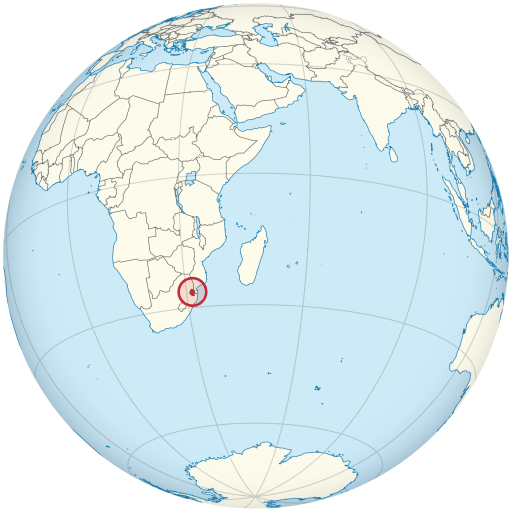
Eswatini wants legal cannabis but locals say, 'that's bad for business'
What happened:
Eswatini plans to legalize cannabis for medicinal and research purposes. Activists and farmers aren't excited about it, reports Cebelihle Mbuyisa for Semafor.
Why this matters:
Eswatini's got a handful of industries (agriculture, textiles, sugar-processing) and a whole lot of unemployment (24% of a population of 1.2 million).
Tell me more:
The proposed bill, first tabled in parliament by the health ministry in 2020, will amend sections of a law passed in 1922 by the British who ruled the kingdom, then Swaziland, as a colony from 1903 to 1968. Critics of the proposed bill say it could bulldoze the small trader, leaving the riches of the cannabis trade in the hands of a select few. Many cannabis farmers in Eswatini's northwestern Hhohho region, who sell their crop locally and in South Africa, are opposed to legislation --- despite police harassment and arrests under the current system. They fear big money players elbowing them out of the market. Plus, besides farming, locals are also cashing in on cannabis tourism. Tourists are flocking to the Nkomazi valley to take in the sights of the cannabis farms, and to, well, 'smoke and relax in nature.'
- Did you know that Eswatini cannabis is commonly referred to as "Swazi Gold"? It's quite expensive and highly sought after in global markets due to its apparent potency. I knew so little about the cannabis industry in Eswatini, so I watched this documentary last week.
How so?
The upcoming legislation aims to establish a big shot regulator, the Medicines Regulatory Authority (MRA), says Eswatini Cannabis Association (ECA) chair Saladin Magagula. The MRA would have the power to import, export, and wholesale trade cannabis and its products. Critics are raising eyebrows, arguing it's like letting the umpire swing the bat. "They cannot be both the referee and the player at the same time", Magagula said. The Eswatini Cannabis Association is pushing for a more inclusive structure, but in an absolute monarchy, with political parties banned since 1973, the road to change seems fraught with challenges.
What now?
Eswatini's health minister, Lizzie Nkosi, sees potential in the bill and believes that the legalization of cannabis will, among other things, give the country opportunities for manufacturing various cannabis plant derivative products which give a boost to the economy and thereby give current growers legitimacy and opportunities to be part of a new and growing industry. "All current growers are rated as unemployed --- can you imagine how our employment rates would change?," said Nkosi.
- "Fun" fact: While 70 percent of people in Eswatini live in poverty, the king has bought his wives 19 custom-made Rolls-Royces and owns two private jets, writes Mlamuli Gumedze for The Continent (issue 124). Oh, and he was at King Charles III's Coronation, one of his wives caught my eye right way.
Zoom out:
Cannabis legalization isn't unique to Eswatini. Africa's slowly warming up to it, following global trends. Lesotho, South Africa, Zimbabwe, and Malawi have all made moves to legalize cannabis, be it for private use or medicinal purposes.
An interesting fact about Eswatini, written by ChatGPT
"Despite being smaller than the state of New Jersey, Eswatini boasts an array of wildlife that would make any larger country envious. From the roaming lions and elephants in Hlane Royal National Park to the abundant bird species at Mlawula Nature Reserve, this tiny nation is a testament to the phrase "good things come in small packages." I fact-checked this, of course.
Feminist groups in Mexico are helping abortion seekers in the U.S.

What happened:
Feminist groups in Mexico have seen has seen a spike in demand for their abortion services and information. Surprisingly, a lot of this demand is coming from the U.S.; think 200 to 300 calls every day, report Lorena Riós and Daniela Dib for rest of world.
Context:
The U.S. Supreme Court's reversal of Roe v. Wade in June last year, which protected abortion rights, seems to coincide with the rise in demand. Meanwhile, Mexico in 2021 has taken a different path, with its Supreme Court declaring punishing abortion as unconstitutional.
Why this matters:
This is a reminder of the enduring power of grassroots movements and their commitment to providing safe, accessible, and free healthcare resources for whomever, regardless of borders, ethnicity, religion and gender.
Tell me more:
These feminist women-led groups, like Colectiva Bloodys, Las Libres, Marea Verde, Matamoros Decide, and Red Necesito Abortar, among others, provide free abortion assistance to thousands across Mexico. They also remotely support individuals in countries like Russia and Saudi Arabia. "We still do everything through social media --- from sending information to asking for [their] addresses to sending the abortion pills," said one abortion assistant in Mexico -- and that is extremely dangerous for abortion seekers in the U.S.
How so?
Getting an abortion is considered a felony in some U.S. states. Last year, a mother and a daughter in Nebraska --- where abortion is banned 20 weeks after conception --- were charged with several felonies, after the police uncovered incriminating Facebook messages. It's worse in states like Texas and Ohio, as they have full bans on abortion. Activists say that there are concerns that even third-party apps like period trackers can...
Please log in or subscribe for free to continue reading this issue.
We could use your help to make this issue better. Take a look at the requests below and consider contributing:
- Submit a piece of artwork for this issue
- Submit a news, academic or other type of link to offer additional context to this issue
- Suggest a related topic or source for future issues
- Fix a typo, grammatical mistake or inaccuracy
Below you'll find some of the sources used for this issue. Only sources that support "media embedding" are included.
-
Plans to legalize the lucrative cannabis trade in the southern African Kingdom of Eswatini by overhauling a 100-year-old colonial drug law are being slammed by activists and farmers.
-
Documentary for educational purposes only.http://www.facebook.com/strainhunters http://www.facebook.com/greenhouseseedshttp://www.strainhunters.comTo buy See...
-
Mexican feminist collectives that help with abortions are surging in popularity, an uptick that coincides with the U.S. Supreme Court’s overturning of Roe v. Wade last June.
-
Police say that in Facebook messages they've obtained, Jessica Burgess tells her 17-year-old daughter that she has abortion pills to end her 24-week pregnancy. They're both charged with felonies.
-
In the last 10 days, over 42 people, half of whom belonged to the minority Baluch community, have been hanged by Iranian authorities
-
A group of the Benin bronzes that Germany handed back to Nigeria have vanished into a private collection instead of being exhibited in a museum as promised, pro
-
Nigeria's president says all Bronzes belong to the Oba of Benin throwing return deals into confusion.
-
Mining is banned and logging restricted in a vast Amazon area and some other indigenous reserves.
-
Updates from around the African continent.
-
Yong Hye-in, a member of South Korea’s Basic Income Party, held a press conference on the eve of Children’s Day with her 2-year-old son in her arms to denounce "no kids" policies in the country. During her speech at the National Assembly in Seoul, Yong commented on the need for a society where children and parents do not feel alienated in public facilities. “Everyday life with children is not easy,” she confessed.
-
A path-breaking personal essay calling for social acceptance and full rights for Nepal’s LGBTIQ+ community
-
Our culture shines through the friends and families of hundreds of thousands of LGBTQIA+ Indians who have stood by them steadfastly, as has every single person in my life — from across the social, economic and political spectrum
-
For decades, Claudia Andujar has advocated for the Yanomami people. In a major exhibition at The Shed, her photographs coexist with Indigenous voices.
-
WARNING: This report contains an image of the paintings
Each week, What Happened Last Week curates news and perspectives from Asia, Africa, and the Americas. The newsletter is written by Sham Jaff and focuses on stories that rarely receive sustained attention in Western media.
Read the free edition every week. VIP subscribers receive additional stories, recommendations on what to watch, read and listen, and more.