

In this issue, I write about how the Ethiopian government wants to recover from its 2-year-long civil war on the backs of some 500,000 female domestic workers, "girl-bossing" nationalist Hindu women in India and a protest by around 3,000 migrants in Mexico to end detention centers. Plus, Ethiopia's very own "Aretha Franklin", a new sci-fi from WANA, potentially good UFC news for Senegal, a video on Brazil's Indigenous leader who won the world's most prestigious environment prize last week, some fun facts about Zambia's first president, and so much more.
Ethiopia plans to send 500,000 women to Saudi Arabia for domestic work
What happened:
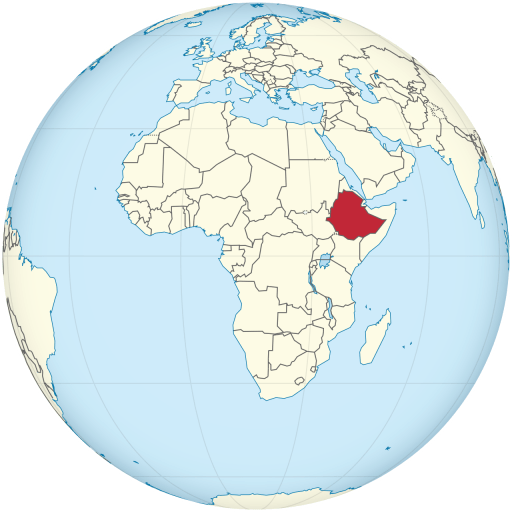
Ethiopia is recruiting 500,000 women for domestic work in Saudi Arabia, drawing criticism from human rights activists due to Saudi Arabia's poor human rights record.
Why this matters:
Ethiopia is dealing with the aftermath of a two-year civil war, and women's lives and safety are put at risk because of it.
Context:
Since the 1980s, Ethiopians have been seeking blue-collar jobs in Saudi Arabia, Lebanon, and Kuwait, often through local recruitment agencies or human traffickers. This time, the Ethiopian government is overseeing the entire process, including recruitment and advertising.
Tell me more:
Zecharia Zelalem reports for Al Jazeera that Ethiopia plans to send up to 500,000 women, aged 18-40, to work in Saudi Arabia as domestic workers. The government has been promoting this opportunity, promising free flights to Saudi Arabia and monthly salaries of US$226, which is significantly more than what most jobs in Ethiopia pay. 'This is an opportunity of a lifetime,' they're being told. 'Much better than school, and you won't have to migrate for work and risk your lives by passing through Yemen or Djibouti, it's so dangerous.'
- Did you know that, according to activist Sagal Abas, "Ethiopian and Somali migrants en route to Saudi Arabia can be murdered, or die in road accidents in Yemen and are quickly buried with no follow-up"?
What's in it for the Ethiopian government?
Ethiopian authorities claim that the program will help the country's economy and save lives by eliminating the need for dangerous migration. Officials hope that remittances from workers abroad will help Ethiopia's struggling economy. However, "Only a small fraction of Ethiopian migrants transfer money through official channels," Ayele Gelan, a research economist at the Kuwait Institute for Scientific Research, told Al Jazeera. "The bulk of funds end up in the black-market sinkhole." We're talking a lot of money here; think $US6.9 billion per year.
Tell me more about the "kafala" system in Saudi Arabia
The "kafala" system in Saudi Arabia is a sponsorship system that governs the relationship between migrant workers and their employers. Under this system, foreign workers are required to have a local sponsor, usually their employer, who is responsible for their visa and legal status in the country. It's been widely criticized for its restrictive nature and its potential to enable exploitation and abuse of migrant workers. For example, a worker loses their documented status if they flee from their employer, even in the case of abuse. And abuse is... rampant; so rampant that the European Union Parliament passed a resolution in 2020 condemning exactly this.
Interesting fact about Ethiopian women, written by ChatGPT
"Throughout history, Ethiopia has seen several influential female leaders, such as Empress Taytu Betul, who played a critical role in the Ethiopian victory at the Battle of Adwa in 1896, and President Sahle-Work Zewde, the first female president of Ethiopia." I did some more research on Ethiopian women. For this newsletter's own Spotify playlist, I dove deep into Ethiopian hits by female singers. Do you have a favorite? Ethiopia's "Aretha Franklin" is known as Aster Aweke. Joy Crookes' cooking playlist introduced me to her.
India's militant Hindu nationalist women are breaking the glass ceiling

What happened:
"Across India, an army of militantly oriented, fiercely independent, yet socially conservative women leaders is fast emerging in Hindu nationalist circles", writes New Delhi-based journalist Sanya Dhingra for New Lines Magazine. In other words: There are more and more Hindu women who are girl-bossing a little too close to the sun.
Why this matters:
Right-wing politics in India has been on the rise. Many media outlets associate this development with (male) Prime Minister Narendra Modi and the ruling BJP. But: India's militant Hindu nationalist leaders are not male only. It's time we 'diversify' that narrative and paint a more nuanced picture of the who's who of supporters of Hindutva, an ideology that espouses the vision of India as a Hindu nation and promotes a conservative and exclusionary vision of gender and sexuality.
Tell me more:
Female Hindutva supporters, like thousands of other Hindu nationalist leaders, believe that "it is the divine duty of Hindu women to not only give birth to children, who will go on to serve the Hindu rashtra (nation), but also give them the 'samskar' or 'social values' that will allow them to contribute to the process of nation-building." These women are ambitious, educated and often economically independent, writes Dhingra. They're also louder, more militant, in order to justify their presence in the male-dominated political space.
Did you know that Hindu nationalist organizations have tried to appeal to more women over the last few years? For example,...
Please log in or subscribe for free to continue reading this issue.
We could use your help to make this issue better. Take a look at the requests below and consider contributing:
- Submit a piece of artwork for this issue
- Submit a news, academic or other type of link to offer additional context to this issue
- Suggest a related topic or source for future issues
- Fix a typo, grammatical mistake or inaccuracy
Below you'll find some of the sources used for this issue. Only sources that support "media embedding" are included.
-
Human rights activists have criticised Ethiopia’s continuing recruitment of women for domestic work in Saudi Arabia.
-
Human rights activists have criticised Ethiopia’s continuing recruitment of women for domestic work in Saudi Arabia.
-
More women voted for the BJP than men in all four states that the party won in the recently concluded Assembly elections, according to the data. Here's why.
-
The number of women candidates in elections has increased over the years, but the likelihood of their victory has decreased over time, shows data
-
Find out how and where to watch "The World Before Her" on Netflix and Prime Video today - including free options.
-
Indian-Canadian film-maker Nisha Pahuja on what really goes on inside the radical Hindu Durga Vahini Hindu camp for women.
-
Around 3,000 migrants set out Sunday on what they call a mass protest procession through southern Mexico to demand the end of detention centers like the one that caught fire last month, killing 40 migrants.
-
An Associated Press reporter at the scene in Port-au-Prince counted 13 bodies burning in a street.
-
SAN SALVADOR, El Salvador (AP) — El Salvador opened a trial Wednesday against former President Mauricio Funes alleging that he had negotiated a truce with the country’s powerful street gangs when he was president, but the trial will proceed without Funes who lives in Nicaragua.
-
La población escolar de Honduras es de 2.912.171 menores entre 3 y 17 años de edad, pero hasta el 19 de abril de este año solo 1.697.163 están en las aulas de clases
-
South Africa’s government is frantically working on a plan to dissuade Russian President Vladimir Putin from visiting Johannesburg to avoid making the decision to arrest him.
-
El Salvador: The bill exempts eligible companies from income tax, capital gains and local government taxes, as well as tariff payments on imported goods that technology businesses need.
-
A federal judge in Brazil on Wednesday ordered a temporary suspension of messaging app Telegram, citing the social media platform’s alleged failure to provide all information Federal Police requested on neo-Nazi chat groups. The move is regarded as part of the country’s push against a rise in school violence. The judge also increased the daily fine for non-compliance to 1 million reais (about $200,000). The development comes amid a wave of school attacks, which the federal government is striving to stamp out. Telegram’s press office didn’t immediately respond to an Associated Press email requesting comment regarding whether it was aware of the decision, and its communications with the Federal Police.
-
The government has opposed same sex marriage saying it undermines religious and social values, petitioners say societal acceptance will follow once law paves the way
-
Senegal is named as the UFC's preferred destination as it prepares for a "seminal event" on its first trip to Africa.
-
Health ministry gives green light for two-step treatment to end pregnancies up to nine weeks
-
Alessandra Korap Munduruku organized community efforts to stop mining development in Brazil’s Amazon rainforest, safeguarding 400,000 acres of rainforest.
-
An estimated 100,000 Cubans have died attempting the crossing between 1959 and 1994. Smartphones are changing their journeys and how many balseros have died over the past years.
-
Single people should be honored as much as couples and families, the Church of England has said, pointing to Jesus’ own single status.
Each week, What Happened Last Week curates news and perspectives from Asia, Africa, and the Americas. The newsletter is written by Sham Jaff and focuses on stories that rarely receive sustained attention in Western media.
Read the free edition every week. VIP subscribers receive additional stories, recommendations on what to watch, read and listen, and more.