

In this issue, I delve into various topics, including a tragic stampede at a charity event in Yemen, the brave actions of Sudan's civil society amidst escalating violence, and positive news from El Salvador regarding the arrest of a perpetrator of a decades-old massacre. Additionally, I provide my thoughts on the new "Queen Cleopatra" Netflix trailer, recommend a healing conversation on belonging between two Trinidadian authors, and celebrate a citizen-led fact-checking group in Indonesia, among other topics and good news from all over the world.
A stampede at a charity event killed at least 78 people in Yemen
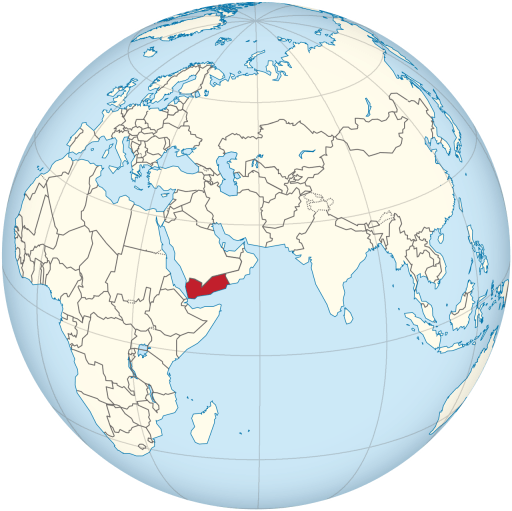
What happened:
Witnesses and Houthi rebel officials reported that during a charity event in Yemen's capital city on Wednesday night, a crowd became panicked by gunfire and an electrical explosion, causing a stampede. The incident occurred during the Muslim holy month of Ramadan. At least 78 people died, and 77 others were hurt.
Why this matters:
The recent tragedy in Yemen was the deadliest in the country in years, but unlike many other incidents in the region, it was not connected to the ongoing war in the country.
Refresher:
Yes, ongoing, because Yemen is still at war. Its capital Sanaa has been under control by a group called the Houthis since 2014, with support from Iran. They took over the internationally recognized government, leading to a bigger conflict, as a coalition led by Saudi Arabia intervened in 2015 to try and restore the previous government. The situation has escalated into a proxy war between Saudi Arabia and Iran, causing over 150,000 deaths, including civilians and soldiers. As a result, Yemen is facing one of the worst humanitarian crises in the world, with over 21 million people in need of help and protection. The United Nations launched a conference in February to raise funds and managed to raise $1.2 billion (out of the $4.3 billion target).
Tell me more:
In an effort to control the crowd, armed Houthis fired shots into the air, accidentally hitting an electrical wire that caused an explosion. The incident happened in the Old City of Sanaa, where hundreds of people had gathered for a charity event organized by local merchants. The charity was set up to distribute $10 to each of the needy, with local businessmen providing the funding. During Ramadan, wealthy people and businessmen typically give out cash and food to help the poor. The Interior Ministry spokesperson, Brig. Abdel-Khaleq al-Aghri, attributed the crush to the "random distribution" of funds without coordinating with local authorities.
What now?
According to the Interior Ministry, two organizers have been detained, and an investigation is currently underway. The Houthis have stated that they will provide compensation of approximately $2,000 to the families who lost a relative in the tragedy, while those who were injured will receive around $400.
Interesting fact about Yemen, written by ChatGPT
"Yemen's Jewish community is one of the oldest in the world, dating back to at least the 2nd century CE. However, due to ongoing conflict and persecution, the population has significantly decreased in recent decades, with many Jews leaving for Israel and other countries." I googled (because I was flabbergasted by this fact myself) and found this interesting presentation by Joey Leskin, a British Jew of Yemeni descent, talking about his community's long history.
The armed forces are fighting each other and Sudan's civil society is stepping up

What happened:
Around 400 people have died since fighting broke out between the army and the paramilitary Rapid Support Forces last week in Khartoum, Sudan. At least 3,500 people have been injured. The fighting has left many people stranded at home without electricity, food or water, and doctors and hospitals say they are struggling to cope.
Why this matters:
Some 45 million people live in Sudan, Africa's third-largest country. Many people here have been affected by war, displacement, and poverty. The 2019 revolution -- in which tens of thousands of protesters ended the three-decade dictatorship of President Omar Hasan al-Bashir -- did not bring about a democracy as many had hoped. The country is now on the verge of a full-blown civil war.
Tell me more:
Sudan is a strategically located country and rich in natural resources. Since 2019, to many governments, Sudan has seemed like it was up for grabs and foreign powers have been picking sides, even delivering weapons, which weakened Sudan's pro-democracy forces and supported military rivals who are now fighting for power in Khartoum. The army and paramilitary Rapid Support Forces overthrew the previous government together, but now both groups want control and disagree over the country's future direction, including whether civilians should rule and whether the two groups should merge.
What's it like in Khartoum now?
Really volatile. Some residents are forced to travel to the River Nile to collect water, writes Mohamed Osman for BBC. Many residents face the difficult decision of whether to stay or flee the city, with some leaving for relatively safe regions like Port Sudan or driving north to Egypt, although only children, the elderly, and women can enter Egypt without visas, writes Mat Nashed for Al Jazeera. The ambivalent security situation has made coordinating an escape a nightmare. African Arguments editor Raga Makawi wrote a first-hand account of her days of terror and flight with Kholood Khair for The Economist (soft paywall) when violence erupted last week in Khartoum. "This has been building up for decades," writes Nesrine Malik in The Guardian. Justin Lynch in Foreign Policy argues that U.S. policies are to blame here. Jacqueline Burns "partly" agrees in The New York Times. In the meantime, the U.S. and other foreign governments have evacuated their staff. Some people on Twitter are calling this 'Afghanistan 2.0.'
Any good news?
Sudan's civil society is stepping in. The country's so-called resistance committees aka neighborhood groups, which have led the pro-democracy...
Please log in or subscribe for free to continue reading this issue.
We could use your help to make this issue better. Take a look at the requests below and consider contributing:
- Submit a piece of artwork for this issue
- Submit a news, academic or other type of link to offer additional context to this issue
- Suggest a related topic or source for future issues
- Fix a typo, grammatical mistake or inaccuracy
Below you'll find some of the sources used for this issue. Only sources that support "media embedding" are included.
-
A crowd stampeding at an event to distribute financial aid during the Muslim holy month of Ramadan in the Yemeni capital, Sanaa, has left at least 78 people dead and 77 injured, according to Houthi officials and witnesses. The tragedy Wednesday night was sparked when armed Houthis fired into the air in an attempt at crowd control, apparently striking an electrical wire and causing it to explode, two witnesses said. The stampede occurred in the Old City in central Sanaa, where hundreds of people had gathered at a charity event organized by merchants. Officials said dozens of injured people were taken to hospitals and two organizers were detained. The tragedy came ahead of Eid al-Fitr, which marks the end of Ramadan later this week.
-
Harrowing conditions have triggered a mass exodus and transformed Khartoum into what feels like a ghost town.
-
With fierce fighting in Sudan cutting off supplies, people are travelling to the famous river in order to survive.
-
Harrowing conditions have triggered a mass exodus and transformed Khartoum into what feels like a ghost town.
-
The conflict in my birth country has its roots in a power struggle that began with the Darfur genocide 20 years ago, says Guardian columnist Nesrine Malik
-
A misguided effort to integrate the RSF into the Sudanese Armed Forces led to a tragic but predictable conflict.
-
Groups of activists around Sudan have set up networks of medics, nurses and engineers to respond to citizens’ needs.
-
WhatsApp groups and social media are brimming with offers of help for those without food or medicine.
-
South Sudan, Chad and Egypt all depend on stability in their neighbor Sudan, whether it's for economic, humanitarian or security reasons.
-
Uncover a city with over 200 pyramids. This is Meroë, the ancient capital of the Kushite Kingdom, in Sudan’s Nile Valley.
-
The U.S. arrested Salvadoran retired military officer Roberto Antonio Garay Saravia, for his alleged involvement in El Salvador's El Mozote massacre.
-
On December 11, 1981, El Salvador’s US-backed soldiers carried out one of the worst massacres in the history of the Americas at El Mozote.
-
El Salvador's government apologises for a 1981 massacre in which more than 1,000 people were killed, nearly half of them children.
-
On April 4, ICE agents arrested Roberto Garay Saravia, a second lieutenant in the U.S.-trained Atlacatl Battalion that carried out the 1981 massacre in El Mozote. His deportation trial could shed new evidence on the events, as the massacre trial in El Salvador came to a halt 18 months ago.
-
Los incendios forestales en la capital acabaron con 39,133 hectáreas de bosque desde 2017 hasta abril de 2023
-
Over 400 migrants died while attempting to cross the Central Mediterranean between January and March of this year, making it the deadliest first quarter on record since 2017, the International Organization for Migration (IOM) said on Wednesday.
-
Amnesty International condemned the decision, calling it 'extremely cruel'
-
Anurag Maloo: Anurag Maloo, 34, is a resident of Kishangarh in Rajasthan. | World News
-
This marks the first time the Ethiopian government has formally said it would negotiate with the Oromo Liberation Army.
-
El director del INEC asegura que esta mujer podría ser la persona con más años en Panamá y tal vez en el mundo.
-
A healthy lioness is caught on camera in a reserve where the big cats have not been seen since 2004.
-
Patty Jenkins and Gal Gadot’s Cleopatra movie will never be as controversial as the Elizabeth Taylor film.
-
Set in India, England, Trinidad and St Lucia, Love The Dark Days by Ira Mathur follows the story of the life of Dolly, of mixed Hindu Muslim parentage in post-colonial India living with a grandmother whose privileged family having colluded with the brutality of the British Rule in India, passes down a similar pecking order to her granddaughter.
-
La presentadora Inés Sánchez de Revuelta murió este *FECHA* a la edad 91 años.
-
A huge consignment of cocaine has been found floating off the eastern coast of the island of Sicily, Italian police said.
-
More than 3 tons of cocaine floating in the ocean have been seized by authorities in New Zealand in one of the country’s single biggest drugs busts.
Each week, What Happened Last Week curates news and perspectives from Asia, Africa, and the Americas. The newsletter is written by Sham Jaff and focuses on stories that rarely receive sustained attention in Western media.
Read the free edition every week. VIP subscribers receive additional stories, recommendations on what to watch, read and listen, and more.