

In this issue, I focus on a huge legal win for trans men's rights in Hong Kong, the two earthquakes in Syria, Turkey and Kurdistan as well as all other natural disasters that happened last week. Plus, to counter so much bad news, I dug deep to get you good news from Panama, Pakistan and India.
In Hong Kong, two trans men won their legal right to be recognized as female without undergoing full surgery
Trans activists in Hong Kong celebrated a legal victory last week. Henry Tse and 'Q', two trans men, fought for the right to be recognized as a man without full surgery -- and won. (South China Morning Post, Paywall)
Why this matters:
Transmen are the minority within the minority of LGBTQ+ people in Hong Kong. Due to various reasons, little attention has been given to trans men and the issues they face. They are marginalized to the extent that we are close to being invisible.
Tell me more:
This legal victory has been more than four years in the making. Tse has long been fighting to change the gender marker on his ID card from female, his assigned sex at birth, to male. In 2017, his initial application to do so was rejected, with the Commissioner of Registration citing, 'well, you haven't had your sex reassignment surgery yet. The law says you need one.' Tse, along with two other trans men who had the same issue, lodged a judicial review arguing that 'the fact that we have to have surgery to be recognized as female is unconstitutional. This law clearly violates our right to privacy.' Many of their petitions failed... until last Monday. A five-judge panel ruled that the government policy did, in fact, infringe on their constitutional right to privacy. (Hong Kong Free Press)
- Zoom out: InChina, the trans population is small, according to research carried out in 2020 by Zhang Yudi, a professor at the School of Humanities and Social Sciences, University of Science and Technology Beijing. Yudi found 30 transgender people in a sample of 10,590 from 26 colleges in 10 provinces. This works out at 0.28%, suggesting a transgender population of a little more than four million. Life for trans people in China can be hard, as broader society and local courts are still hostile to trans aspirations. However, you get some privileges if you are better-off financially. (Nikkei Asia) One of China's biggest stars is also transgender, Jin Xing. (The New York Times)
Who is Henry Tse?
He's 31 years old and one of the founders of the NGO Transgender Equality Hong Kong. He first experienced gender dysphoria (meaning, his gender identity didn't align with the gender he was assigned at birth) when he was still a young child. His family was "very conservative" and considered gender non-conforming behavior in general to be problematic. Things didn't get any better when he attended a religious all-girls secondary school. "From the very first day, we were told that we need to 'be a lady' and be elegant," Tse told Hong Kong Free Press. Having always sported short hair, he said he was picked on by some teachers, who assumed he was a tomboy and thus a bad student. After completing the public exam in Form Five (read up on the education system in Hong Kong here), Tse left for the United Kingdom. Later, as he was preparing to enter university, he realized he didn't want to be seen as a woman anymore. And in 2012, he started hormone treatment and underwent top surgery to remove his breasts the following year.
But why did he not go 'all the way'?
Tse said he experienced gender dysphoria mostly because he felt like he didn't look like a man. After the mastectomy, he did not feel the need for a more invasive procedure to remove his uterus and ovaries. He also successfully changed the gender marker on his British passport to male, and had no problem living and working as a male during his time in the UK. But things changed when Tse returned to Hong Kong, where he was still labelled as female on his ID card.
How important is the ID card in Hong Kong?
Very important. "In Hong Kong, we are required by law to carry our ID card with us every day. The police can request to check your ID anytime. You basically need your ID card for everything. So when it plays such an important role in your daily life, the mismatch [of the gender marker] becomes a huge problem," Tse said in an interview with the Hong Kong Free Press. Tse said that he feels panic whenever he has to show his card, because he doesn't know how police will react. "I also feel like my privacy has been intruded on... because it exposed my history of being transgender," he said. Every time he presents his ID card, he is forced to "come out" again.
OK. Wow. This is delayed justice, then.
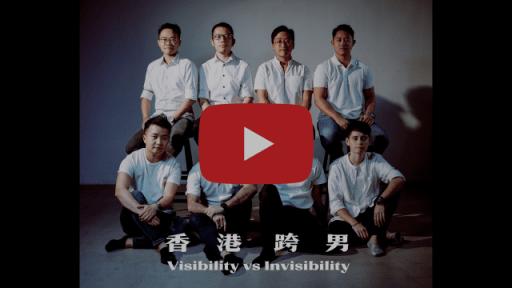
Exactly. That's also what Tse called the judges' decision as he thanked his lawyers and all those who have supported him along his journey, "especially the lads and the volunteers who have helped in the Transmen in Hong Kong project. Without them, [this] historic moment... would not have happened." Henry also produced this multimedia advocacy project to put trans men in the forefront of this greater debate in society:
Two strong earthquakes hit Syria, Kurdistan and Turkey -- more than 33,000 people have died so far
Two earthquakes, just past 4 a.m. local time, hit parts of Turkey, Kurdistan (Bakûr and Rojava) and Syria last Monday. More than 30,000 people have died so far (Sunday numbers). The United Nations says, the final number may even double. Millions of people have now been displaced. The region is on the brink of a health crisis, and politics is making the response to this natural disaster even worse.
I tried to summarize everything that felt relevant. Bear with me if some stuff is missing still.
Why this matters:
The earthquakes rank among the world's largest continental quakes ever recorded, according to Edwin Nissen, a Canadian seismologist. (Al Jazeera) It was the most powerful earthquake to hit the region in nearly a century. Turkey...
Please log in or subscribe for free to continue reading this issue.
We could use your help to make this issue better. Take a look at the requests below and consider contributing:
- Submit a piece of artwork for this issue
- Submit a news, academic or other type of link to offer additional context to this issue
- Suggest a related topic or source for future issues
- Fix a typo, grammatical mistake or inaccuracy
Below you'll find some of the sources used for this issue. Only sources that support "media embedding" are included.
-
Transgender rights: top Hong Kong court says in landmark ruling government breached rights of 2 trans men by preventing them from changing ID cards | South China Morning PostCase brought by Henry Edward Tse and ‘Q’ in 2019 against commissioner of registration after he refused to review gender status on their identity cards.
-
Hong Kong trans activist Henry Tse fought for the right to be recognised as a man without full surgery - and won | Hong Kong Free Press HKFPIt has been more than four years since Hong Kong trans activist Henry Edward Tse began an uphill legal battle to get the government to recognise him as a man. In early January this year, he donned a smart navy blue suit, paired with a carefully-chosen blue-and-pink tie, for his appearance at the Court of […]
-
HONG KONG -- Huang Xi, the founder of mainland China's only nonprofit organization offering psychological counseling to transgender people, is a rarit
-
All the updates as they happened on Sunday, February 12.
-
Situation Report in English on Türkiye and 1 other country about Food and Nutrition, Health, Earthquake and more; published on 11 Feb 2023 by STL
-
The Barzani Charity Foundation is a non-governmental, non-political and non-profit organization which was founded in 2005 in Erbil, the capital city of the Kurdistan Region of Iraq. Mr. Masrour Barzani is the head of BCF's Board of Founders and directly oversees the operation of this foundation.
-
Die Hilfs- und Menschenrechtsorganisation medico international arbeitet mit Partner:innen weltweit.
-
CAIRO (AP) — Cooking gas cylinders packed into the basement of a four-story apartment building in northern Egypt exploded on Friday, collapsing the building and killing at least six people.
-
JAKARTA (Xinhua): Four people were killed and several houses and buildings destroyed after a 5.4 magnitude earthquake jolted eastern Papua province on Thursday (Feb 9), a disaster agency official said.
-
Authorities say a gas explosion in an apartment building in the Siberian city of Novosibirsk killed at least 12 people including a 2-year-old child.
-
Authorities in Peru say landslides triggered by steady rains swept mud, water and rocks into several villages in the country's south, killing at least 36 people.
-
Officials in western Austria warned winter sports enthusiasts of dangerous conditions in the area.
-
Nearly 50 vehicles were involved in multiple collisions along a highway in Hunan province within the span of 10 minutes. Read more at straitstimes.com.
-
Authorities say 87 rhinos were killed last year compared with 45 in 2021, most poached from the country’s largest park.
-
The IS group 'attacked about 75 people on Saturday while they were collecting truffles in the Palmyra area, in the eastern countryside of Homs," the Britain-based Syrian Observatory for Human Rights said
-
Authorities say they will prepare to be able to shoot down the unidentified object.
-
Moldova was granted EU candidate status last June, but has faced intense pressure from Moscow.
-
Además, descubrieron otros cuatro tipos de culebra caracolera con ojos inusuales que habitan en los árboles y están en peligro por el desarrollo de la actividad minera.
-
Educación: Ajedrez, será parte de las actividades en escuelas oficiales y particulares - Nacionales | Tvn PanamáEl ajedrez, un juego de conocimiento mental será parte de la asignatura de educación física, como parte de una actividad extracurricular y herramienta pedagógica con el objetivo de promover la enseñanza en las escuelas oficiales y particulares, esto con la emisión del Decreto Ejecutivo N° 1 de 25 de enero de 2023,
-
Harassment by men on public transport is one reason why female participation in the workforce stands at only 20%
-
Trans man Zahad gave birth to a healthy baby
-
She was burned with an iron and beaten with a bike chain, leaving lasting physical and emotional scars. Read more at straitstimes.com.
-
Reporters sans frontières assure la promotion et la défense de la liberté d'informer et d'être informé partout dans le monde. L'organisation, basée à Paris, compte des bureaux à l'international (Berlin, Bruxelles, Genève, Madrid, Stockholm, Tripoli, Tunis, Vienne et Washington DC) et plus de 150 correspondants répartis sur les cinq continents.
-
The South African professor is under fire for suggesting life under apartheid was better than life under democracy. Stop giving him so much airtime.
-
For centuries, cows have been considered sacred by India’s majority Hindu population, a symbol of both the Earth and the divine.
Each week, What Happened Last Week curates news and perspectives from Asia, Africa, and the Americas. The newsletter is written by Sham Jaff and focuses on stories that rarely receive sustained attention in Western media.
Read the free edition every week. VIP subscribers receive additional stories, recommendations on what to watch, read and listen, and more.