

Issue #396: This week's issue is built around two conversations.
The first is with German-Syrian journalistRaja Khadour. Following the deadly attack at Berlin Pride on Saturday, we talk about what it means to be both queer and Arab in Germany right now, why those voices are often missing from the public debate, and how discussions about Islamism, migration, and LGBTQ+ rights so quickly become polarized.
The second is with South African cultural theoristGrant Farred, who studied under Edward Said. More than twenty years ago, he wrote a remarkable essay on race and Argentine football. As Argentina reached another World Cup final, I wanted to know whether his arguments still hold up today. Our conversation goes far beyond football, touching on race, nationalism, colonialism, and the stories countries tell about themselves.
Also this week: Continued blackouts in Cuba, Nicaragua's president's attempt to squash the opposition, protests in Sri Lanka and Nepal, Indigenous progress in Mexico, strike season in India, Eswatini, South Korea, and the DRC, mining conflicts in Costa Rica, likely overlooked insights out of Greece from journalistDimitra Kanta, and repurposing a major Nazi attraction.
This newsletter features contributions by intern Pia Monroy Rodriguez and has been edited by Jonathan Ramsay.
After the Berlin Pride Attack: What is it like to be both queer and Arab in Germany right now?
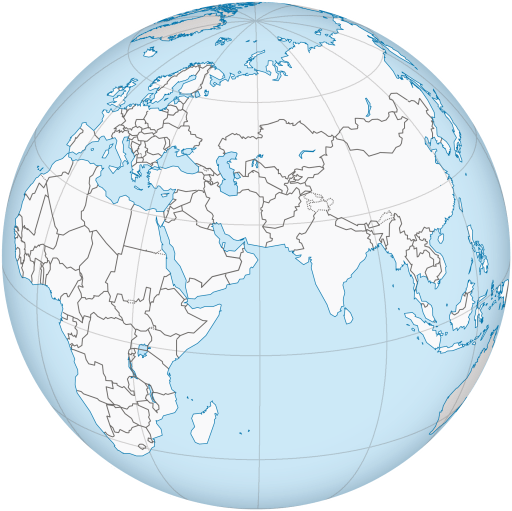
Zoom out first: "What Happened Last Week" usually focuses on stories from Asia, Africa, and the Americas. But the fault lines shaping those stories don't stop at Europe's borders. Questions of migration, identity, religion, and belonging "travel" with people, and they shape political debates in countries like Germany, just as much as they do elsewhere.
What happened:
On July 25, a 21-year-old German citizen, born and raised in Berlin with Lebanese roots, with a history of Islamist extremism, drove a van into a crowd of Pride attendees before continuing the attack on foot. One woman was killed, and 29 people were injured. Authorities say the suspect, who was known to security services, was later shot dead by police after a nationwide manhunt.
Why this matters: The deadly attack has reignited one of Germany's most polarizing debates. Following the attack, discussions quickly turned to migration, Islamism, and queer rights. Yet, the voices of people who are both queer and Arab or Muslim have often been reduced to symbols in someone else's political argument.
Tell me more:
To better understand these overlapping experiences, I spoke with journalist Raja Khadour (Instagram, LinkedIn). He reports for the German public broadcaster NDR, including the media programme ZAPP, and has long covered migration, discrimination, LGBTQ+ communities, and social justice. Born to Syrian parents, he brings both professional expertise and personal experience to questions of identity, belonging, and public discourse.
In our conversation, we discuss how queer Arabs and Muslims experienced the attack at Berlin Pride, and why conversations about Islamist violence, migration, and LGBTQ+ rights so often leave little room for nuance.
The following is a written interview. The responses have been lightly edited for clarity.
WHLW: In your video, you describe living with several different kinds of fear at once. Why was it important for you to draw attention to that?
Raja Khadour: The fears I talked about in the video are just a fraction of what many in the queer community deal with on a daily basis. To outsiders, this is usually invisible. Fear is our constant companion: with family, on the street, at work, while shopping, on a date and even at Pride, where one should feel the very opposite of fear. We've seen a rise in anti-queer resentment and, with it, violence against our community. This has coincided with the growing popularity of the far-right AfD. In recent years, we've also seen constant anti-CSD demonstrations in cities across Germany, something we hadn't experienced before and, which is, in my opinion, a direct result of the queerphobic rhetoric from conservative and far-right politicians.
WHLW: Speaking about Islamist violence against LGBTQ+ people proves to be tricky at times. What happens when you do?
Raja Khadour: As someone who belonged to a Muslim minority in Syria, I know what religious extremism and the violence it entails mean. I have seen what it did to my country and its people. It destroyed communities. I therefore think it's crucial that we are the ones who call it out. At the end of the day, we have first-hand experience with it, and we are the people extremists would target first.
At the same time, many people avoid talking about this because they worry it will reflect badly on Muslim communities and migrants as a whole. That fear is real. After an attack like this, you can already predict what it means for those communities. The demand to distance yourself comes almost automatically.
I myself got accused of supporting Islamism in the comments, solely because I am Syrian. Even my criticism of the coverage on Gaza, which I had voiced in a completely different context on my Instagram account, was dragged into this debate to discredit my position.
WHLW: Politicians quickly responded with calls for tougher security and migration policies, even though the alleged perpetrator was a German citizen. What did you make of those reactions?
Raja Khadour: That begs the question of what it means to be German. Who belongs, and who is considered an intruder. Frankly, this is something we've grown accustomed to. We're never German enough, even when born and raised in Germany. It's also easier for politicians to claim no responsibility whatsoever for Islamist extremism. "It's imported," they say. But this is a homegrown issue, and it needs to be treated as such if we truly ever want to find a solution.
We need to ask ourselves: how is it possible for young people to become radicalized so quickly in the first place? Cutting funding for marginalized communities is definitely not helping. Just look at "Demokratie leben!", the federal programme that funds exactly this kind of prevention work. Over 200 projects are losing their funding, including Lambda, a queer youth network.
WHLW: Queer activists from Syria and other parts of the Global South bring lived experience with religious authoritarianism, displacement, state violence, and survival. Do you feel those experiences are genuinely heard in Germany?
Raja Khadour: I often observe and experience that queer voices from the SWANA region are invited only when they fit a certain narrative. For example, to describe how terrible things were in their home countries and express their gratitude towards the German state. As soon as a more nuanced perspective is called for, things go quiet. Especially now, when some people only want to think in "either-or" terms. It is precisely these nuances that are most urgently needed.
WHLW: What do you think German debates on Islamism could learn from people who have experienced religious extremism firsthand?
Raja Khadour: It must finally become clear that religious extremism has to be confronted on the basis of ideology, not on the basis of origin. Those who have experienced this firsthand, and people who grew up both queer and Muslim, can often distinguish much more clearly between religion, culture, and ideology.
Race, football and Argentina: Are we asking the wrong questions? An interview with cultural theorist Grant Farred
What happened:
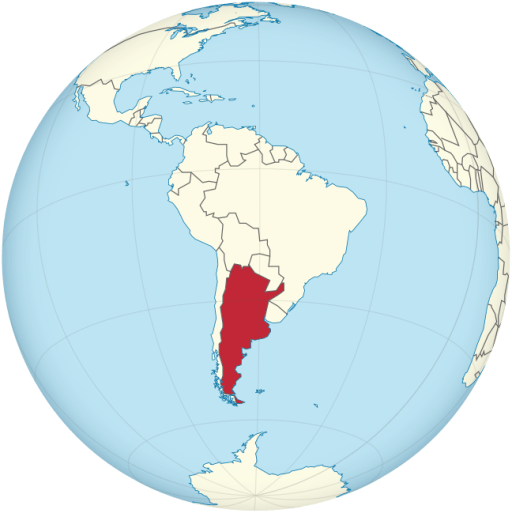
Since Spain's Men's FIFA World Cup victory over Argentina, one question has dominated many progressive online spaces: Why is Argentina's national team overwhelmingly white?
To add some nuance to that age-old debate, I spoke with cultural theorist Grant Farred, a South African-born scholar whose work focuses on...
Please log in or subscribe for free to continue reading this issue.
We could use your help to make this issue better. Take a look at the requests below and consider contributing:
- Submit a piece of artwork for this issue
- Submit a news, academic or other type of link to offer additional context to this issue
- Suggest a related topic or source for future issues
- Fix a typo, grammatical mistake or inaccuracy
Below you'll find some of the sources used for this issue. Only sources that support "media embedding" are included.
-
Trauer, Entsetzen und weitere Ermittlungen nach Anschlag auf Berliner CSD
-
The AfD and right parties in Germany are leveraging the Berlin Pride attack, but they pose their own existential threat to queer lives.
-
Grant Farred: PhD (Princeton University, 1997), MA (Columbia University, 1990), BA Honours, Cum laude, University of the Western Cape, South Africa, 1988).
-
Quetta, July 24 (IANS) Several leading human rights organisations on Friday strongly condemned the enforced disappearance of six civilians, including women and children, by Pakistani forces in Balochistan.
-
MBABANE – The Industrial Court has declared the strike by Maloma Colliery (Pty) Ltd employees unlawful and issued an order restraining the workers from continuing with the work stoppage. The court delivered the ruling on Wednesday, granting the mining company urgent relief after it approached the bench to challenge the industrial action. The affected employees […]
-
More than 20 members of the opposition party Chadema, have been arraigned before courts in different regions and charged with terrorism and economic sabotage offences.
-
Daniel Ortega anuncia un “muro” de leyes en Nicaragua “para que los golpistas, los vendepatrias, no puedan volver al Gobierno”
-
SOS Médias Burundi Goma, July 18, 2026 — As Congolese authorities intensify their efforts to contain the new Ebola outbreak, the response is facing a major obstacle : the ongoing strike by healthcare workers. In the health zones of Butembo and Beni, in eastern Democratic Republic of Congo (DRC), as…
-
La société civile accuse l’AFC/M23 et les ADF de plonger le Nord-Kivu dans la violence | Radio OkapiMassacres à répétition, enrôlements forcés et pillages systématiques : le Nord-Kivu s’enfonce dans une crise sécuritaire majeure, constate la coordination de la société civile du Nord-Kivu. Dans une déclaration solennelle faite mardi 21 juillet à Mangina, dans le territoire de Beni, l’organisation dresse un constat accablant des exactions commises contre les civils.
-
PORT AU PRINCE, Haiti (CMC)—For millions of Haitians, daily life has become a struggle to stay safe, find enough food and simply move around their own neighbourhood. Powerful armed gangs control large parts of the capital, Port-au-Prince, and continue expanding into other parts of the country. Families are fleeing their homes in record numbers, schools and health centres have closed, and humanitarian agencies are struggling to meet soaring needs as...
-
The Authors are enrolled in the LL.M in Human Rights and Democratisation in Africa (HRDA) at the Centre for Human Rights, University of Pretoria. Noah Yesuf Rumbidzai Musonza Derara Roba Keziah Mwashigadi Femicide in South Africa: The staggering realities Femicide represents the most extreme manifestation of gender-based violence against women and girls. The numbers are…
-
The demonstrations mark a dramatic turn for the youth movement that had played a key role in the 2025 uprising, which dismantled Nepal's old political establishment and paved the way for Balen Shah
-
The three convicts were jailed for six offences, and they will stand trial on the four remaining charges to which they pleaded not guilty.
-
The labor union of GM Korea, the Korean unit of U.S. carmaker General Motors, said Tuesday it is extending its partial strike this week as wage neg...
-
Trade union leaders said the struggle of gig workers was part of the broader fight for labour rights, dignity and social security
-
La organización comunal pidió conocer cualquier expediente administrativo relacionado con el proyecto y advirtió sobre posibles impactos ambientales, sociales y sanitarios.
-
Adoption, Memory, and Cold War Greece: Kid pro quo? | Gonda Van Steen | 9780472131587 | University of Michigan PressThis book presents a committed quest to unravel and document the postwar adoption networks that placed more than 3,000 Greek children in the United States, in a movement accelerated by the aftermath of ...
-
by Katerina Bakogianni
-
Adolf Hitler's birthplace in Austria has been inaugurated as a police station. The move aims to deter its use as a pilgrimage site for Nazi sympathizers.
-
Eine Wiener Polizistin und ein Wiener Polizist, die antisemitische und nationalsozialistische Chats verbreitet haben, dürfen wohl weiter ihren Beruf ausüben. Die Beamtin stand sogar wegen nationalsozialistischer Wiederbetätigung vor Gericht und wurde verurteilt.
-
Journalism centered on Asia, Africa, and the Americas. Curated by journalist Sham Jaff. Sign up for the free newsletter: https://gishty.com/newsletters/what-happened-last-week
Each week, What Happened Last Week curates news and perspectives from Asia, Africa, and the Americas. The newsletter is written by Sham Jaff and focuses on stories that rarely receive sustained attention in Western media.
Read the free edition every week. VIP subscribers receive additional stories, recommendations on what to watch, read and listen, and more.